Exhaust Gas Cleaning System (EGCS) Explained
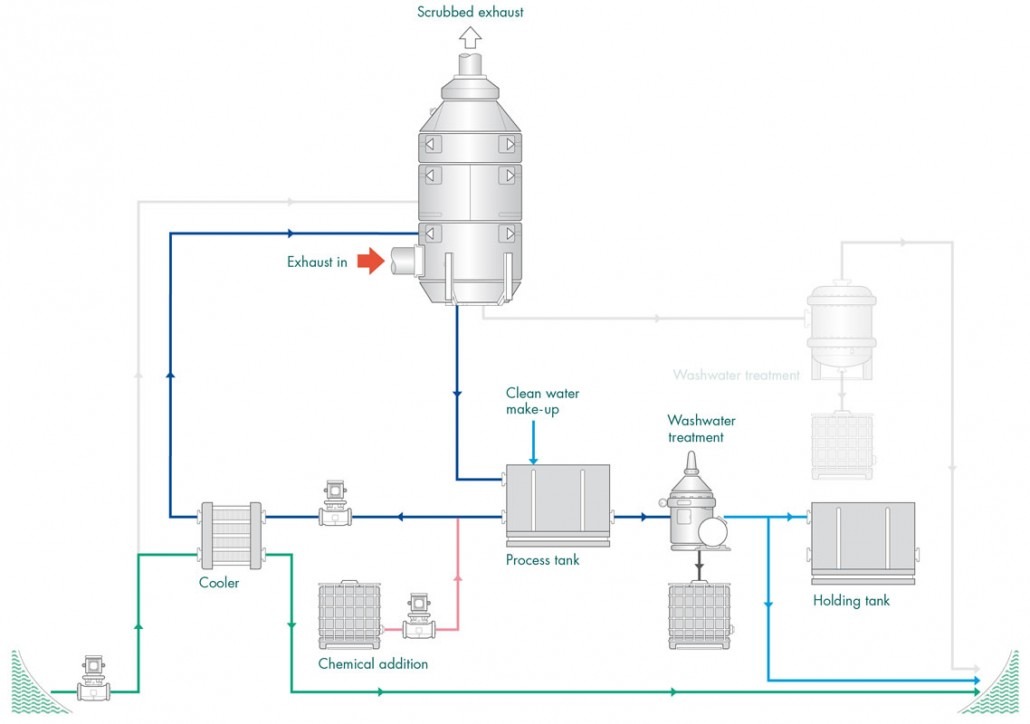
EGCS (Exhaust Gas Cleaning System), also known as a scrubber, is an essential environmental technology that helps ships reduce sulphur oxide (SOx) emissions.
Overview of EGCS
An exhaust gas cleaning system removes harmful substances from ship engine or boiler emissions before they are released into the atmosphere. Wet scrubber systems use water to interact with exhaust gases, removing sulphur oxides, while ensuring wastewater and sludge are safely treated.

Main Components of EGCS
1. Scrubber Unit 🚀
- Location: Usually installed high up in the ship, near the funnel.
- Function: Mixes exhaust gas with seawater or freshwater to remove sulphur oxides.
2. Washwater Treatment Plant 💧
- Purifies the washwater, removing pollutants to meet environmental discharge standards.
3. Sludge Handling Facilities 🗑️
- Collects sludge generated by washwater treatment, stores it onboard, and ensures safe disposal at port facilities.
Types of EGCS
Open Loop System 🌊
- Uses seawater for scrubbing, with treated water discharged back to the sea.
- The natural alkalinity of seawater neutralizes acidic substances.
- Typical water usage: 45 m³/MWh

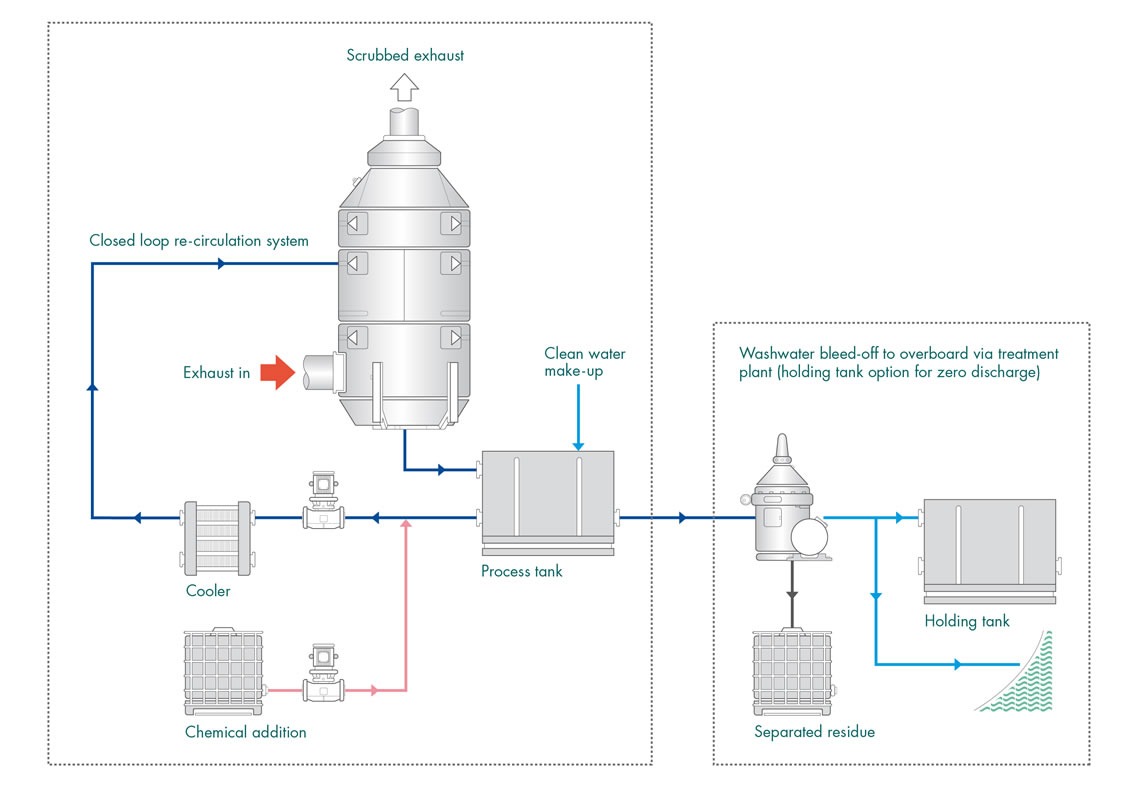
Closed Loop System 🔄
- Uses freshwater with alkaline chemicals (e.g., caustic soda) for scrubbing and neutralization.
- Washwater is recirculated, with minor losses replenished by freshwater.
- A small portion of washwater is treated before discharge, with typical discharge rates of 0.1–0.3 m³/MWh.
Hybrid System ⚡
- Capable of operating in both open and closed loop modes.
- Closed loop mode can use either seawater or freshwater, making it flexible for different operating regions.

Advantages of EGCS
- Significantly reduces sulphur oxide (SOx) emissions, ensuring compliance with international environmental regulations.
- Protects marine environments and improves air quality.
- Provides flexibility with open loop, closed loop, or hybrid operation depending on voyage requirements.